SPWM Driver Application
Description
The SPWM driver application provides a configurable PWM framework for generating precise and advanced pulse-width modulated waveforms. It supports multiple PWM operating modes such as Normal PWM, PWM with Dead-Time (PWM_DT), and Pseudo-Random PWM (PWM_PR). The driver enables accurate control of frequency, duty cycle, dead-time, trigger routing, interrupt generation, and descriptor-based burst operation.
The SPWM driver is intended for motor control, power electronics, and timing-critical embedded applications. It supports both continuous operation and descriptor-controlled burst generation, allowing waveform execution with minimal CPU intervention.
Prerequisites
Choose one setup path:
Building and Flashing the Example using VS Code
Use the VS Code flow described in the SL2610 guides and VS Code Extension guide:
Build (VS Code):
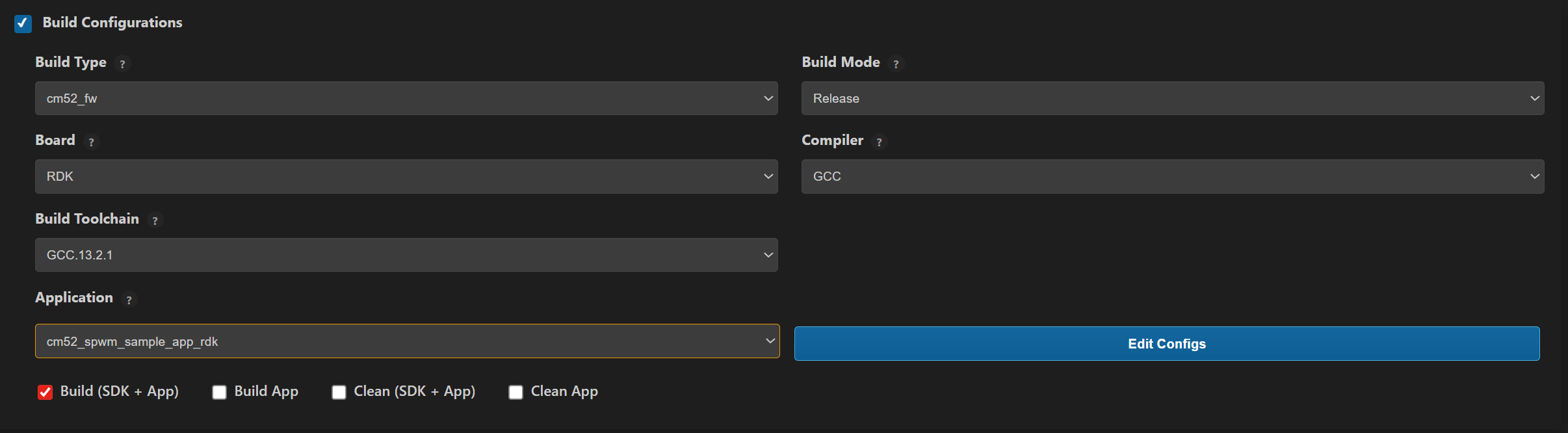
Open Build and Deploy -> Build Configurations.
Select
cm52_spwm_sample_app_rdkin the Application dropdown.Build with Build (SDK + App) for the first build, or Build App for rebuilds.
Flash/Image Generation (VS Code):
Note: On Windows, use WSL for SL2610 image generation.
Build the SL2610 bootloader image.
Open SL2610 Image Generation, select the generated application ELF, and click Run.
This is equivalent to
make imagegenand directly generates the system sub-image.
Flash/download the MCU image to target.
Building and Flashing the Example using CLI
Use the CLI flow described in the SL2610 Platform Guide:
Build (CLI):
Configure SPWM mode selection in
spwm_sample_app.hbefore building:#define SPWM_TIMER_MODE 0 #define SPWM_CAPTURE_MODE 0 #define SPWM_PWM_MODE 0 #define SPWM_PWM_DEADTIME_MODE 0 #define SPWM_PWM_PSEUDO_RANDOM_MODE 0 #define SPWM_PWM_MODE_DESC 0 /* DESCRIPTOR MODE CONFIGURATION */ #if SPWM_PWM_MODE_DESC /* Demo selection - set ONE to 1, rest to 0 */ #define SPWM_DEMO_440_480KHZ 0 #define SPWM_DEMO_800_840KHZ 0 #define SPWM_DEMO_100_400KHZ 0 #define SPWM_DEMO_200_800KHZ 0 #endif
Note: Enable only one mode at a time.
Build the SL2610 bootloader from SDK root:
make sl2610_bootloader_rdk_defconfig BOARD=SL2610_RDK
make
Build SPWM sample app from
<sdk-root>/examples:cd <sdk-root>/examples export SRSDK_DIR=<sdk-root> make cm52_spwm_sample_app_rdk_defconfig BOARD=SL2610_RDK BUILD=SRSDK
Image Generation and Flash (CLI):
Note: On Windows, use WSL for SL2610 image generation. In WSL, ensure required tools are installed: Python,
make, and Arm GNU toolchain. You can use the VS Code extension’s Tools Installer in WSL, or follow Linux Environment guide for CLI setup.
Build the SL2610 bootloader image.
Generate the system sub-image:
cd <sdk-root>/examples
export SRSDK_DIR=<sdk-root>
make imagegen
Flash/download image to target.
Running the Application using VS Code Extension
Power the board and press RESET after flashing.
For logging output, connect UART to the target and open a serial console (for example, MobaXterm).
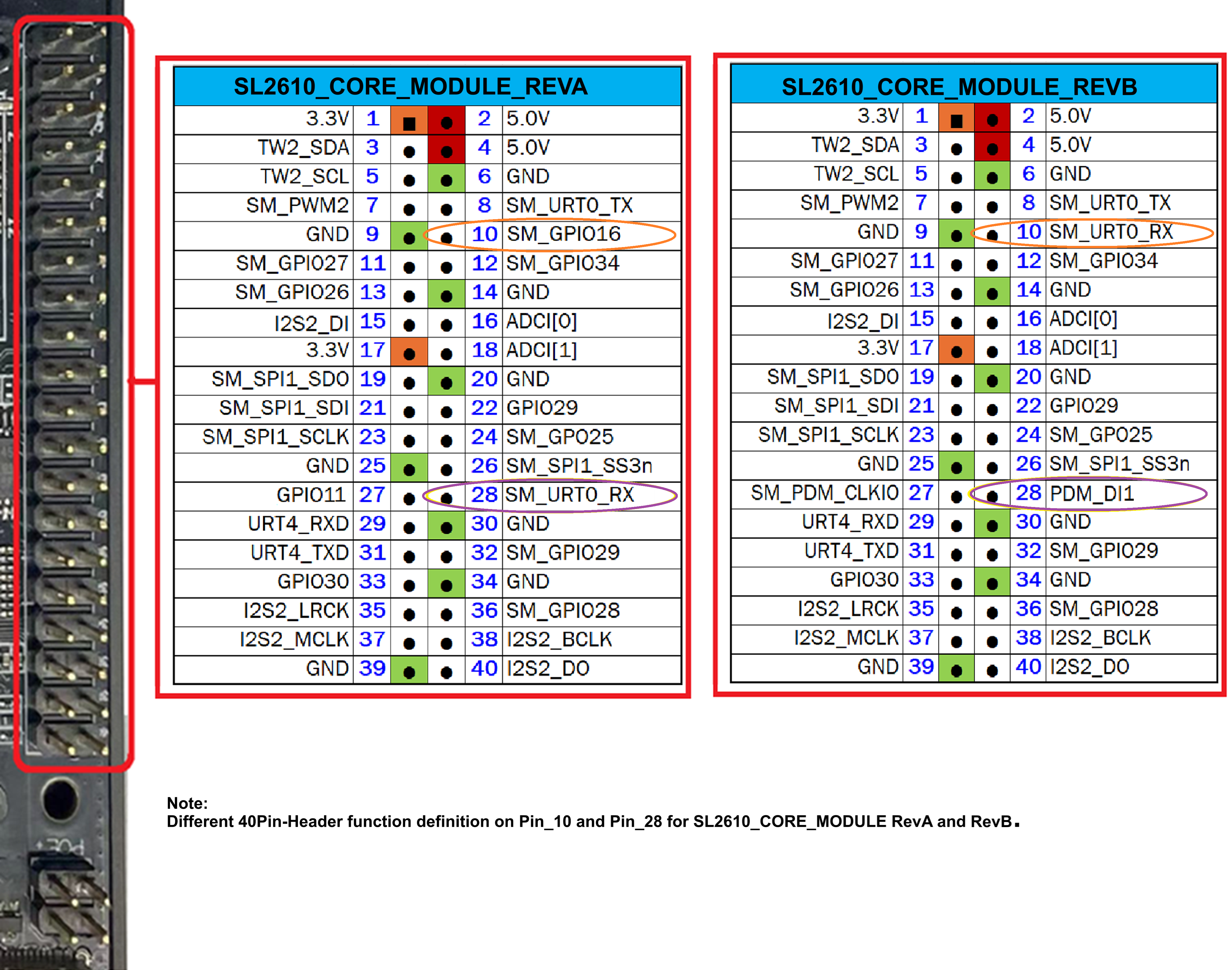
For PWM waveform observation, connect a logic analyzer to the required pins.
Sample applications logs and output
Timer Application
Console logs.
0000000000:[0][INF]▒▒0▒J:SPWM Timer Mode Starts (group 0)
0000000005:[0][INF]▒▒0▒J:CLKDIV[0] Setup: int_div=1 frac_div=0
0000000011:[0][INF]▒▒0▒J:INTERRUPT Setup: group=0 intr=1
0000000016:[0][INF]▒▒0▒J:[ISR] Callback triggered!
0000000016:[0][INF]▒▒0▒J:[ISR] Group 0: CC0 match
0000000016:[0][INF]▒▒0▒J:[ISR] Group 0: CC0 match
0000000022:[0][INF]▒▒0▒J:CC0 interrupt received, counter=3034
0000000028:[0][INF]▒▒0▒J:SPWM-Timer Sample App Completed (group 0)!
Timer + Capture Application
Console logs.
0000000000:[0][INF]▒▒0▒K:SPWM Timer + Capture App Starts
0000000005:[0][INF]▒▒0▒K:CLKDIV[0] Setup: int_div=1 frac_div=0
0000000011:[0][INF]▒▒0▒K:INTERRUPT Setup: group=0 intr=1
0000000016:[0][INF]▒▒0▒J:[ISR] Callback triggered!
0000000016:[0][INF]▒▒0▒K:[ISR] Group 0: CC0 match
0000000022:[0][INF]▒▒0▒K:Capture results: CC0=1108 CC1=1108
0000000027:[0][INF]▒▒0▒K:Capture successful
0000000031:[0][INF]▒▒0▒K:SPWM TIMER + CAPTURE Sample App Completed!
PWM Sample Application
Console logs.
0000000000:[0][INF]▒▒0▒G:SPWM PWM-Demo Starts
0000000004:[0][INF]▒▒0▒G:CLKDIV[0] Setup: int_div=1 frac_div=0
0000000010:[0][INF]▒▒0▒G:SPWM Group 0 Enabled
0000000014:[0][INF]▒▒0▒G:PWM started: Period=5000 CC0=1000
0000000020:[0][INF]▒▒0▒G:Duty = 20.0%
0000000023:[0][INF]▒▒0▒G:PWM Sample App Completed Successfully!

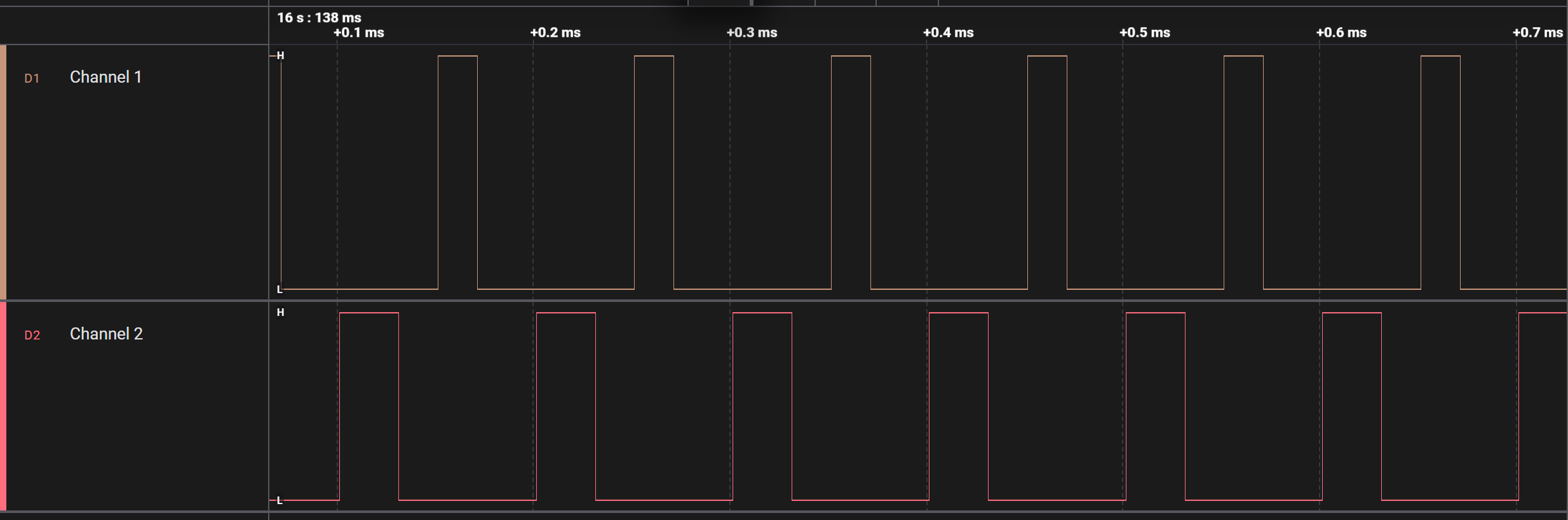
PWM with Deadtime Application
Console logs.
0000000000:[0][INF]▒▒0▒G:PWM-DT App Starts
0000000003:[0][INF]▒▒0▒G:CLKDIV[0] Setup: int_div=1 frac_div=0
0000000010:[0][INF]▒▒0▒G:PWM-Deadtime Sample App Completed!
PWM Pseudo Random Application
Console logs.
0000000000:[0][INF]▒▒0▒I:SPWM PWM Pseudo Random Mode Test Starts
0000000005:[0][INF]▒▒0▒I:CLKDIV[0] Setup: int_div=1 frac_div=0
0000000012:[0][INF]▒▒0▒I:INTERRUPT Setup: group=0 intr=1
0000000017:[0][INF]▒▒0▒I:PWM Pseudo Random Mode Sample App Completed!

PWM Ramp signal with descriptors Application
Console logs.
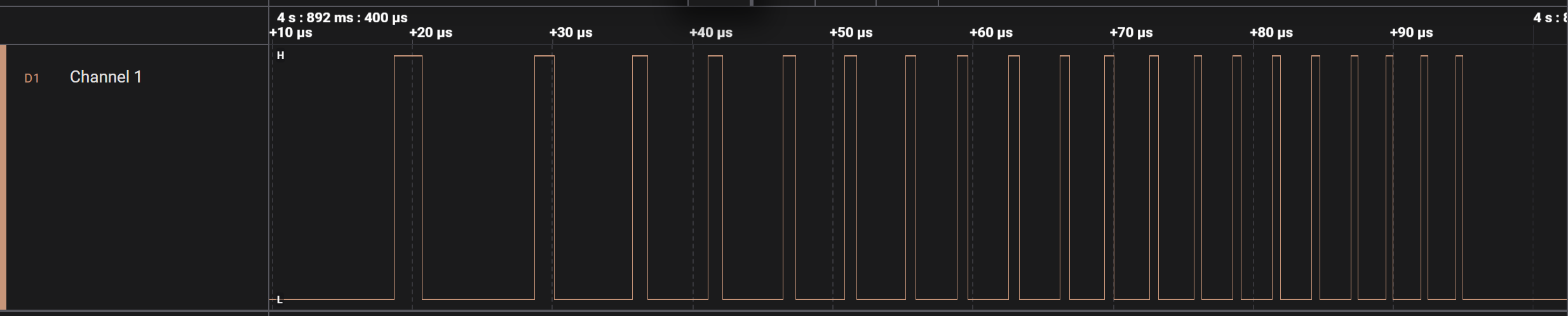
0000000000:[0][INF]▒▒0▒R:  Step 0: Period=999 CC0=200 Cycles=1 (f=100000 Hz, duty=20.00%, ~11.2µs)
0000000008:[0][INF]▒▒0▒R:  Step 1: Period=699 CC0=140 Cycles=1 (f=142857 Hz, duty=20.00%, ~11.2µs)
0000000017:[0][INF]▒▒0▒R:  Step 2: Period=537 CC0=107 Cycles=2 (f=185874 Hz, duty=19.89%, ~11.2µs)
0000000026:[0][INF]▒▒0▒R:  Step 3: Period=436 CC0=87 Cycles=2 (f=228833 Hz, duty=19.91%, ~11.2µs)
0000000035:[0][INF]▒▒0▒R:  Step 4: Period=367 CC0=73 Cycles=3 (f=271739 Hz, duty=19.84%, ~11.2µs)
0000000044:[0][INF]▒▒0▒R:  Step 5: Period=317 CC0=63 Cycles=3 (f=314465 Hz, duty=19.81%, ~11.2µs)
0000000053:[0][INF]▒▒0▒R:  Step 6: Period=279 CC0=56 Cycles=4 (f=357143 Hz, duty=20.00%, ~11.2µs)
0000000062:[0][INF]▒▒0▒R:  Step 7: Period=249 CC0=50 Cycles=4 (f=400000 Hz, duty=20.00%, ~11.2µs)
0000000071:[0][INF]▒▒0▒R:PWM ramp: 8 steps, 20 total cycles, ~90 µs burst, 58 descriptors
0000000079:[0][INF]▒▒0▒R:CLKDIV[0] Setup: int_div=1 frac_div=0
0000000085:[0][INF]▒▒0▒R:Initial config: ACTIVE=[Period=10 CC1=2] BUFFER=[Period=999 CC1=200]
0000000093:[0][INF]▒▒0▒R:Building descriptor chain for configured burst time
0000000100:[0][INF]▒▒0▒R:Descriptor chain built with 58 descriptors
0000000107:[0][INF]▒▒0▒R:Descriptor 0 completed
0000000108:[0][INF]▒▒0▒R:PWM-Ramp started with the configured frequency and duty cycle
0000000116:[0][INF]▒▒0▒R:PWM-Ramp using Descriptor completed successfully!